

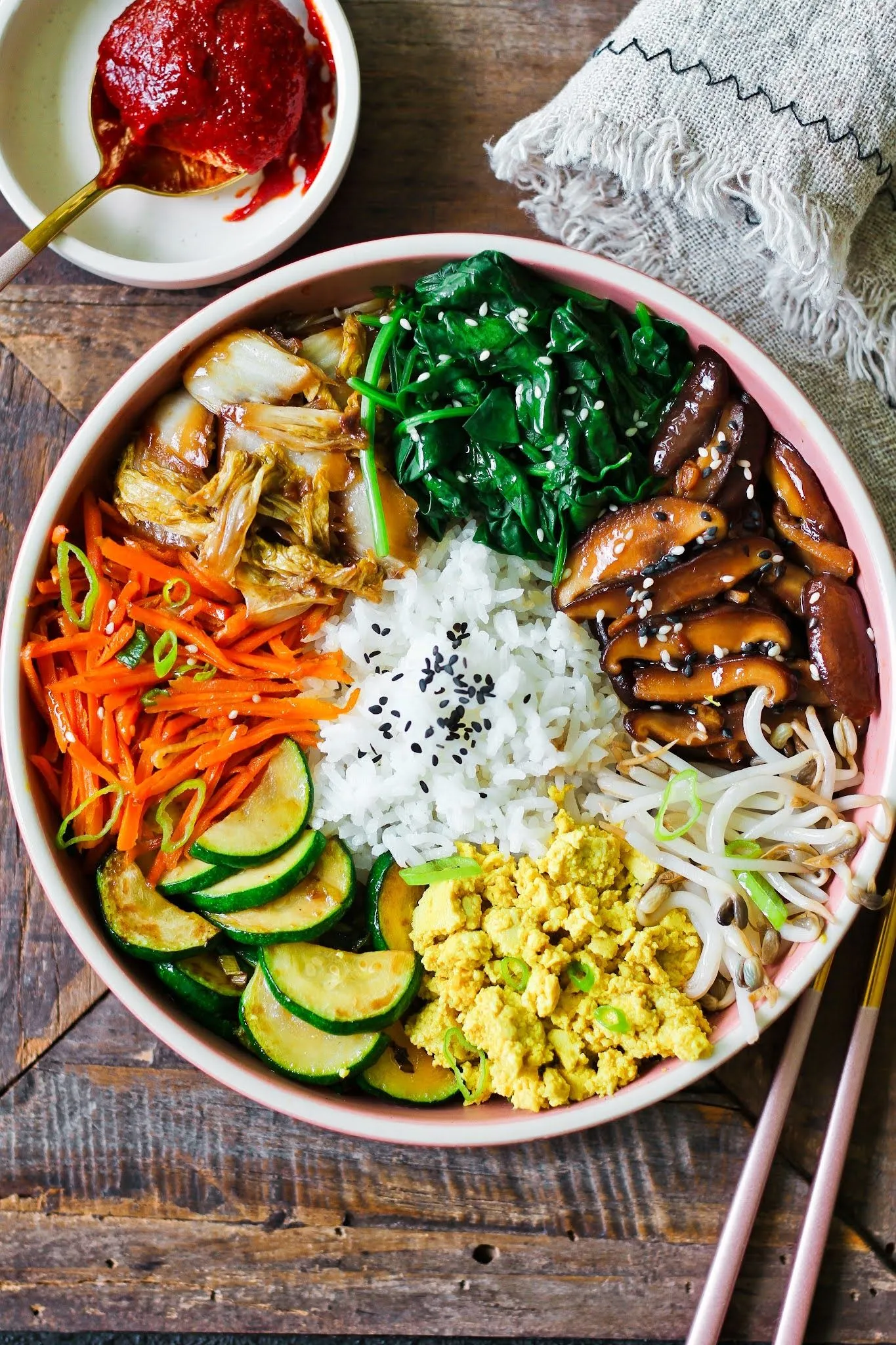
Get ready to embark on a mouthwatering culinary journey with the most delicious and foolproof bibimbap recipe that will transport your taste buds straight to the vibrant streets of Korea! This colorful, nutritious, and incredibly satisfying mixed rice bowl is not just a meal—it's an experience that combines stunning visual appeal with explosive flavors in just 35 minutes. Whether you're a Korean cuisine novice or a seasoned foodie, this easy bibimbap recipe will become your new go-to comfort food that looks like a restaurant masterpiece but can be effortlessly created in your own kitchen.
Prep Time: 20 mins
Cook Time: 15 mins
Total Time: 35 mins
Cuisine: Korean
Serves: 2 servings
Ingredients
- 2 cups cooked rice
- 1 cup assorted vegetables (spinach, carrots, zucchini)
- 2 eggs
- 2 tablespoons gochujang
- 1 tablespoon sesame oil
- 1 tablespoon sesame seeds
- 1 green onion, chopped
Instructions
- Prepare the vegetables by washing and cutting them into thin, uniform strips. For spinach, blanch briefly in boiling water and drain. For carrots and zucchini, julienne or slice into thin matchsticks.
- Heat a small amount of sesame oil in a skillet over medium heat. Sauté each vegetable separately to maintain their individual colors and textures. Season lightly with salt. Set aside each vegetable on a separate plate.
- In the same skillet, fry eggs sunny-side up or to your preferred doneness. The yolk should remain slightly runny for traditional bibimbap.
- Warm the cooked rice and divide it evenly between two serving bowls, creating a smooth base layer.
- Artfully arrange the sautéed vegetables on top of the rice, creating distinct sections around the bowl.
- Place the fried egg in the center of each bowl.
- Drizzle gochujang sauce over the top and sprinkle with sesame seeds and chopped green onions.
- Before eating, mix all ingredients thoroughly to combine flavors and ensure even distribution of the spicy sauce.
Tips
- Vegetable Preparation is Key: Always sauté vegetables separately to maintain their individual colors, textures, and flavors. This technique ensures each ingredient remains distinct and vibrant.
- Rice Temperature Matters: Use warm rice as your base to help the flavors meld together and create a more enjoyable eating experience.
- Egg Perfection: For authentic bibimbap, aim for a sunny-side-up egg with a slightly runny yolk that will mix beautifully into the rice when you stir.
- Gochujang Adjustment: Customize the spice level by adding more or less gochujang sauce according to your heat tolerance.
- Presentation is Everything: Arrange vegetables in neat, colorful sections around the bowl for that Instagram-worthy look that makes bibimbap so visually appealing.
- Mix Thoroughly: The magic of bibimbap happens when you mix all ingredients together just before eating, ensuring every bite is packed with diverse flavors and textures.
Nutrition Facts
Calories: kcal
Carbohydrates: g
Protein: g
Fat: g
Saturated Fat: g
Cholesterol: mg
